NISIR
ASRC Centre
ASRC Centre

Advancing livestock health, biotechnology, food safety, and vector-borne disease control for sustainable development.
1960s: Established as the Agriculture Research Council (crop & livestock research).
Later: Transitioned to Livestock Productivity and Disease Control Programme (LPDCP).
Programmes to Centres: Became Livestock and Pest Research Centre.
Present: Animal Science Research Centre (ASRC).
To advance livestock productivity, animal health, and food safety through cutting-edge research, innovative biotechnology solutions, and sustainable disease control strategies that benefit Zambian farmers and communities.
Three strategic pillars driving animal science innovation
GMO detection, biosafety, molecular biology, analytical services.
Food safety, aflatoxin biocontrol, nuclear & isotopic techniques.
Tephrosia-based pesticides, tick-borne disease control, IKS.
The Biosafety Act promotes public awareness and liability mechanisms. The National Biosafety Authority (NBA) follows precautionary principles.

Established in 1981 following a serious contamination of relief maize. Mycotoxins are a persistent food safety problem in tropical regions.
Mitigation in maize & groundnut value chains.
Monitoring contaminants using isotopic tools.
Mycotoxin surveillance in maize & groundnuts.
Prevalence of pesticides, aflatoxins, ochratoxins.
Utilization of Indigenous Knowledge Systems (IKS) and sustainable biodiversity use are flagship programmes.
Scientifically validated against ticks, reducing trypanosomiasis.
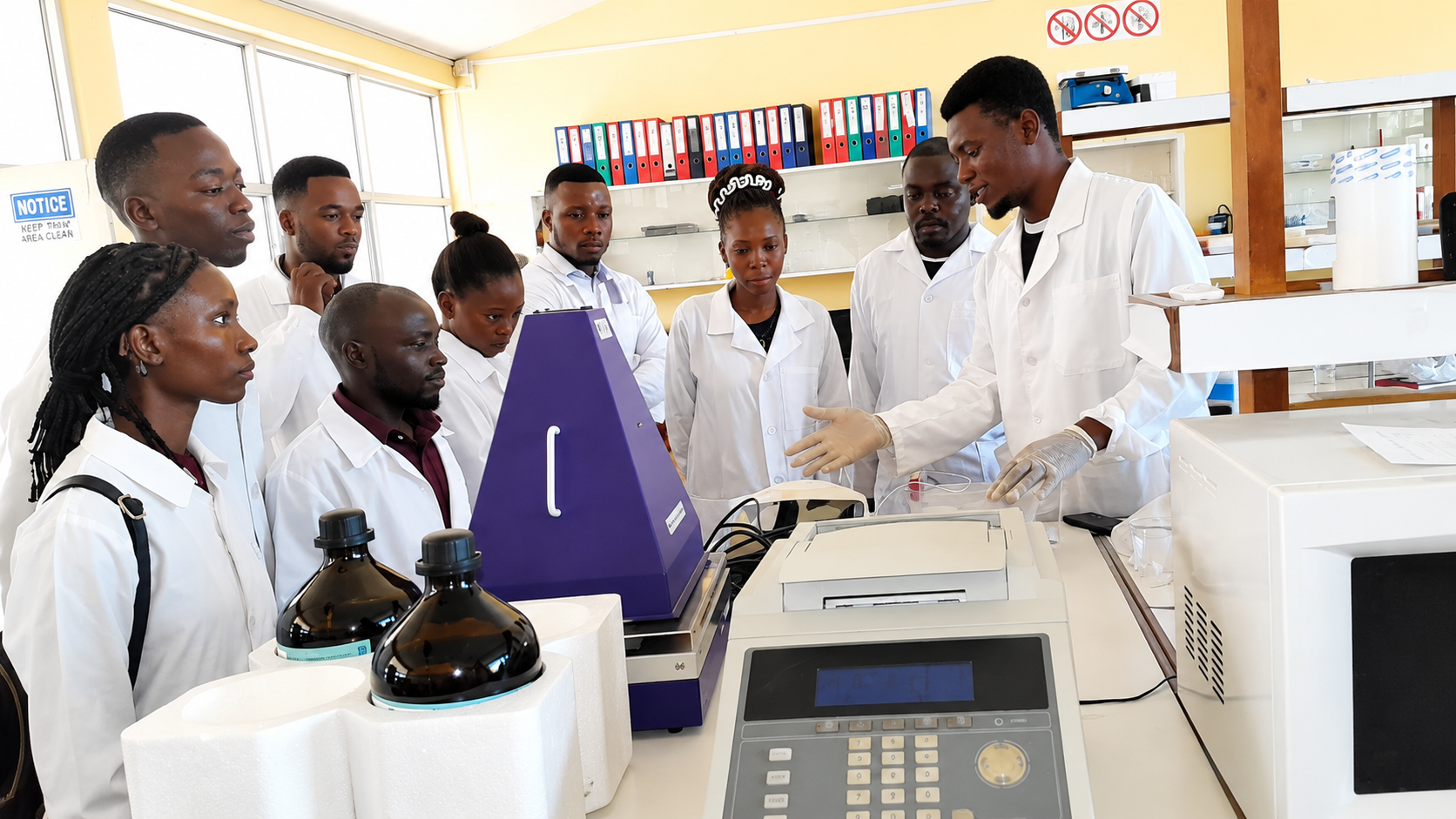
Students from CBU, UNZA, Evelyn Hone College gain practical skills in molecular biology, mycotoxin analysis.
Impact: Skilled graduates & strengthened national capacity.
Partners: IAEA, ARC-OVI, CVRI, National Biosafety Authority, CBU/UNZA. Satellite labs in Choma & Kasama.